
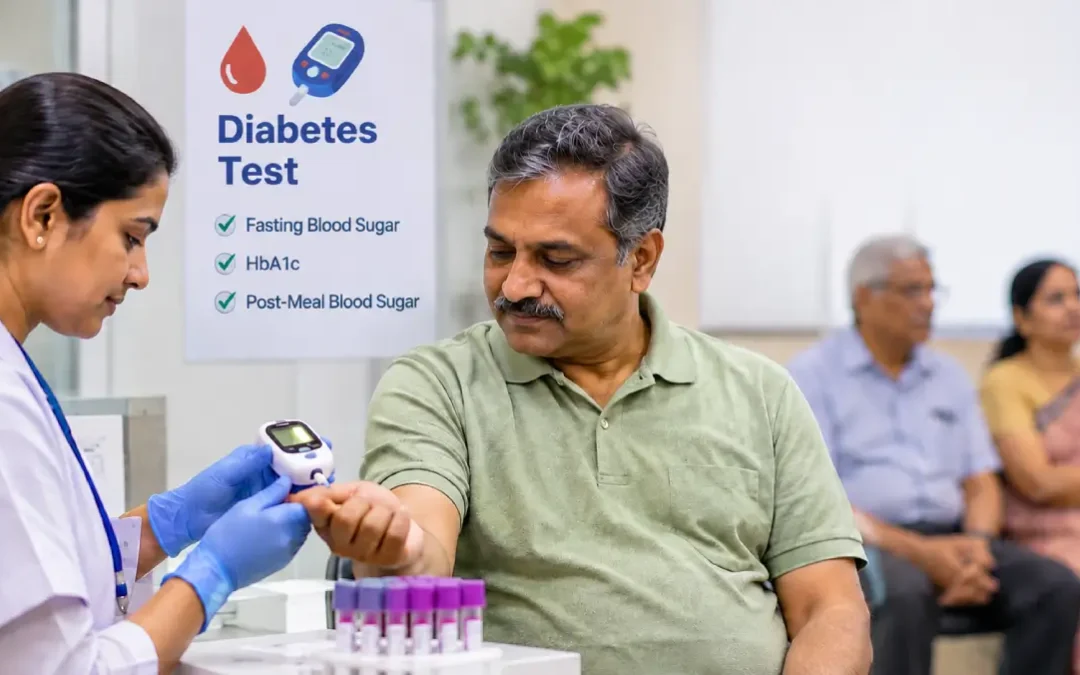
Get Tested.
The comfort of not knowing can come at a cost.
Isn’t this exactly what you’ve been dreading?
But here’s the truth: you haven’t invited bad news into your life. You’ve stopped putting off information that was important to have.
How does knowing earlier help?
You have a clearer starting point.
Diabetes can develop without obvious symptoms. Knowing your diagnosis gives you an opportunity to understand your current health, assess whether complications are present and discuss what appropriate management looks like.
You may have more room to act.
Prediabetes is an important window for intervention. In an Indian clinical trial, lifestyle changes reduced the relative risk of progressing to diabetes by 28.5% over three years among participants with impaired glucose tolerance.
You get time to plan
Treatment, regular monitoring and medical appointments come with expenses. Knowing your diagnosis gives you time to understand those costs and plan ahead.
A thought worth carrying forward:
A positive result is information, not a dead end.
You may not get the result you hoped for. But you get the information you need to make decisions about what comes next.
Sources: IDF Diabetes Atlas, 11th ed., 2025; Ramachandran et al., Diabetologia, 2006;49:289-297 (IDPP-1); Bansal et al., BMC Health Services Research, 2025.
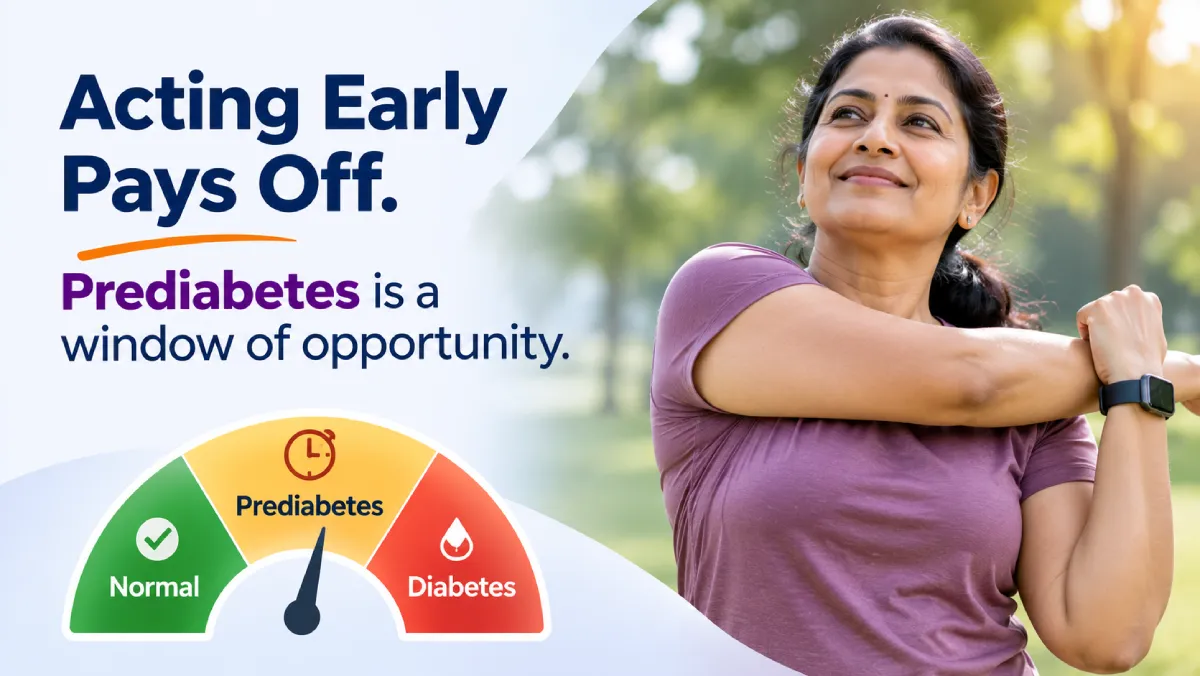
PREDIABETES IS NOT DIABETES.
Your blood glucose levels are higher than normal, but not yet in the diabetic range. It is a sign that your risk of developing Type 2 diabetes is higher. But progression is not inevitable.
Your Chance to Take Control
Appropriate lifestyle changes — including dietary adjustments, regular physical activity and weight management where needed — can help reduce the risk of developing Type 2 diabetes.
The earlier prediabetes is identified, the sooner you can discuss the right steps with your healthcare professional.
YOU CAN TURN THINGS AROUND.
Prediabetes does not have to be a one-way journey. With appropriate intervention, blood glucose levels can return to the normal range in some people. This is known as regression to normoglycaemia.
THE EVIDENCE IS ENCOURAGING.
11 additional people in every 100
A 2024 systematic review of 44 randomised trials involving 14,742 people with prediabetes found that lifestyle weight loss interventions helped an additional 11 people per 100 return to normal glucose levels, compared with control groups.
Your future self will thank you.
A little attention today can change what comes next.
Source: Jayed et al., American Journal of Clinical Nutrition, 2024, 130(5):1043-1052.
