
Pneumonia vaccination for adults is one of the simplest ways to protect the lungs as the years go by. In India, the question matters more with each decade after 50, because the same infection that a younger person shrugs off can take a much heavier toll later in life. This guide explains how the pneumococcal vaccine works, who it is meant for, the types available in India, and what to ask your doctor.
What Is Pneumococcal Pneumonia?
Pneumonia is an infection of the lungs in which the tiny air sacs fill with fluid or pus, making it harder to breathe and to get oxygen into the blood. It can be caused by viruses, bacteria and other germs. One of the most common bacterial causes in adults is Streptococcus pneumoniae, known as the pneumococcus.
The pneumococcus can travel beyond the lungs. It can enter the bloodstream or reach the lining of the brain, which doctors call invasive pneumococcal disease. A pneumococcal vaccine is designed to protect against this particular germ. It does not prevent every kind of pneumonia, since other germs can cause the illness too.
Why Pneumonia Is More Dangerous After 60
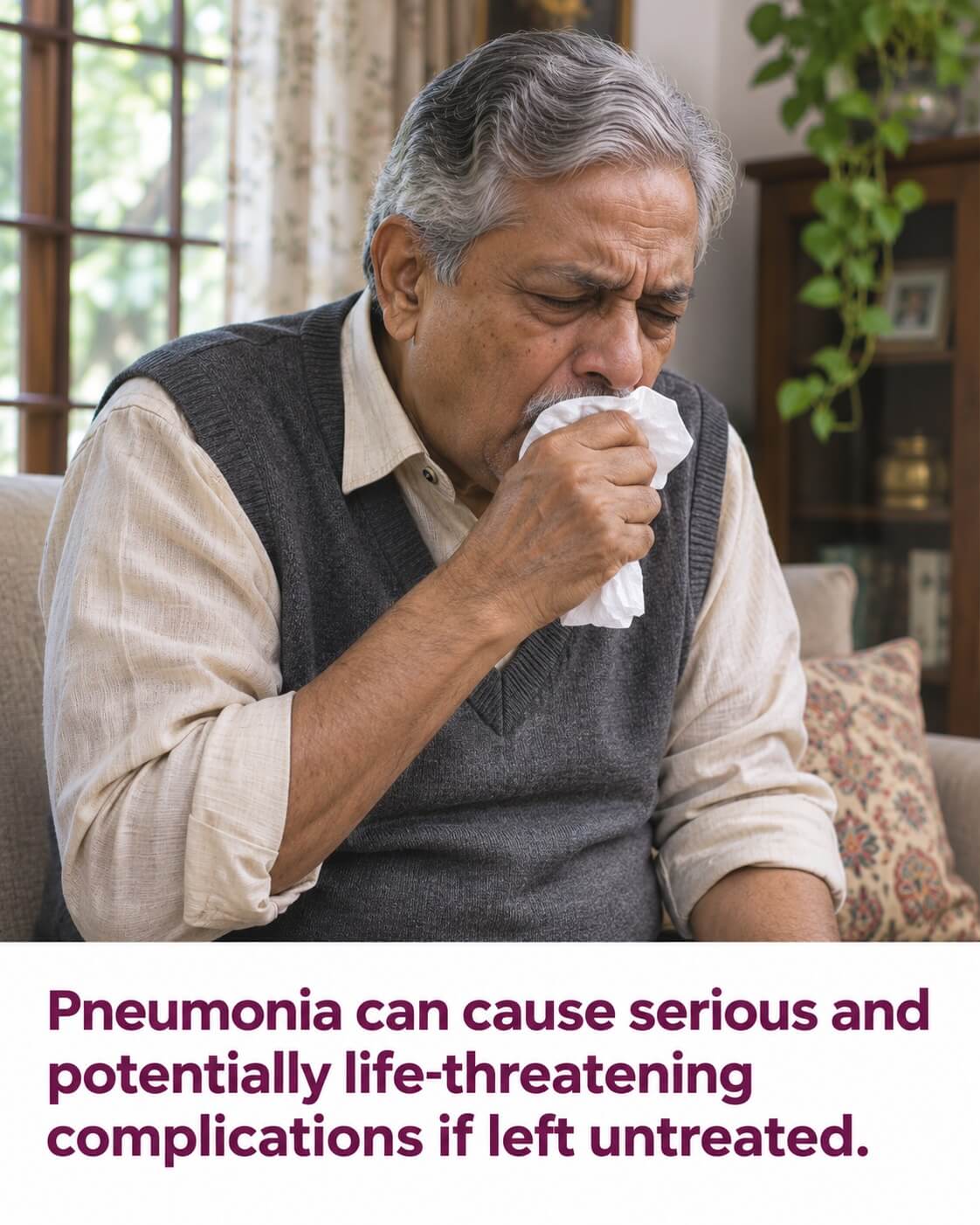
Pneumonia in old age often looks different from pneumonia in a younger adult. A raised temperature and a clear cough may be mild or absent. Instead, an older person may seem unusually tired, confused, off their food or more breathless than usual. Because the signs are quiet, the illness can be recognised late.
- Slower recovery: The body takes longer to clear the infection and regain strength.
- More complications: Pneumonia can unsettle existing conditions such as diabetes, lung disease, and heart disease.
- Greater need for hospital care: Older adults are more likely to need monitoring and treatment in hospitals.
These are the reasons guidelines for older adults place so much weight on prevention.
How Ageing Weakens Lung Defences
The lungs have several layers of natural defence. With age, each one softens a little.
- Cough reflex: A weaker cough clears germs and mucus less effectively.
- Mucus clearance: Tiny hair-like structures that sweep mucus out of the airways work less efficiently.
- Immune response: The immune system reacts more slowly and less strongly to new infections.
- Swallowing: Small amounts of food or saliva may slip into the airways, carrying germs with them.
- Lung reserve: Lung tissue becomes less elastic, so there is less spare capacity when an infection strikes.
None of this means pneumonia is inevitable. It means that a little extra protection, planned in advance, goes a long way. This is the heart of pneumonia prevention in the elderly.
Types of Pneumonia Vaccines Available in India
Three pneumococcal vaccines come up most often when adults and doctors discuss the pneumonia vaccine in India: PCV13, PPSV23 and PCV20. They differ in how they are made and in how many types of the bacterium they cover.
|
Feature |
PCV13 |
PPSV23 |
PCV20 |
|
Full name |
13-valent pneumococcal conjugate vaccine |
23-valent pneumococcal polysaccharide vaccine |
20-valent pneumococcal conjugate vaccine |
|
Types covered |
13 types of the bacterium |
23 types of the bacterium |
20 types of the bacterium |
|
How it works |
Conjugate vaccine: builds a stronger, longer-lasting immune memory |
Polysaccharide vaccine: broader coverage, shorter-lived response |
Conjugate vaccine: wide coverage with a stronger immune memory |
|
Typical use |
Given first, followed by PPSV23 after the interval recommended for the person’s risk category |
Given after PCV13; interval depends on age and risk category |
Single-dose option for eligible adults; can simplify the schedule |
PCV13 vs PPSV23: What Is the Difference?
The PCV13–PPSV23 option remains an alternative when PCV20 is not used. Under the 2026 Indian consensus schedule, PCV13 is followed by PPSV23 after 1 year in adults aged 50 and above and in at-risk adults aged 18–49. For high-risk/immunocompromised adults aged 18–49, PPSV23 may follow PCV13 after at least 8 weeks. A PPSV23 revaccination dose is recommended 5 years after the last PPSV23 dose, where applicable. [CLINICAL REVIEW]
Where PCV20 Fits In
PCV20 was designed to simplify pneumococcal vaccination. It covers 20 serotypes of Streptococcus pneumoniae and is a single-dose option for all adults aged 50 and above, and for adults aged 18–49 in the risk and special situations specified by the 2026 Indian consensus guideline. For people who have previously received a pneumococcal vaccine, the guideline provides for a single dose of PCV20 1 year later; those who completed the PCV13 + PPSV23 schedule should receive PCV20 5 years after the last PPSV23 dose.
Who Should Get the Pneumococcal Vaccine
The 2026 Indian Consensus Guidelines on Adult Immunization recommend pneumococcal vaccination for all adults aged 50 years and above. Adults aged 18–49 may also be eligible when they have specified at-risk or high-risk/immunocompromising conditions, lifestyle-related risks or special circumstances. Your doctor can check which category applies to you. [CLINICAL REVIEW]
The 2026 Indian consensus guideline recommends vaccination for:
- All adults aged 50 years and above
- Adults aged 18–49 with at-risk conditions, including chronic respiratory disorders, chronic heart disease, chronic liver disease or diabetes
- Adults aged 18–49 with high-risk/immunocompromising conditions, including chronic kidney disease, nephrotic syndrome, haemodialysis, HIV, malignancies, organ transplantation, functional or anatomical asplenia, sickle cell disease and other specified conditions
- Adults with specified lifestyle-related risks, such as smoking or alcohol use disorder, and those in specified special situations, such as healthcare personnel, travellers or people attending mass gatherings
The vaccine may be postponed during a significant acute illness. Anyone who has had a serious allergic reaction to a previous dose or a vaccine component should discuss this with their doctor before vaccination.
Vaccination for Seniors With Diabetes, COPD or Heart Disease
Having a long-term condition raises the stakes of pneumonia, which is why these groups are usually first in line for the vaccine.
- Diabetes: An infection can push blood sugar up and make it harder to control, and high blood sugar can in turn make infections harder to fight.
- COPD: The lungs already have less reserve. Pneumonia can set off a flare-up that takes weeks to settle.
- Heart disease: A chest infection puts extra strain on the heart, which can unsettle heart failure or rhythm problems.
Adults aged 18–49 with diabetes, chronic respiratory disease or chronic heart disease may qualify for pneumococcal vaccination under the 2026 guideline. A doctor can confirm the appropriate vaccine and timing. [CLINICAL REVIEW]
Pneumonia Vaccine Schedule for Adults
The schedule depends on your age, risk category and which pneumococcal vaccines you have already received. Your doctor will check your records, which is why a written vaccination card is useful. The table summarises the 2026 Indian consensus approach. [CLINICAL REVIEW]
|
Your situation |
Usual approach |
|
Never vaccinated / vaccination history unknown |
For adults aged 50 and above, and eligible adults aged 18–49: one dose of PCV20. If PCV20 is not used, PCV13 followed by PPSV23 is an alternative; see the interval note below. |
|
Had PCV13 only |
One dose of PCV20, 1 year after the previous pneumococcal vaccine dose. |
|
Had PPSV23 only |
One dose of PCV20, 1 year after the previous pneumococcal vaccine dose. |
|
Had PCV13 followed by PPSV23 |
One dose of PCV20, 5 years after the last PPSV23 dose. |
If PCV20 is not used: adults aged 50 and above and at-risk adults aged 18–49 may receive PCV13 followed by PPSV23 1 year later. For high-risk/immunocompromised adults aged 18–49, PPSV23 may be given at least 8 weeks after PCV13. The 2026 guideline also specifies a PPSV23 revaccination dose 5 years after the last PPSV23 dose, where applicable.
The pneumococcal vaccine can usually be given on the same day as the seasonal flu vaccine, in a different arm. Ask your doctor about the best timing for you.
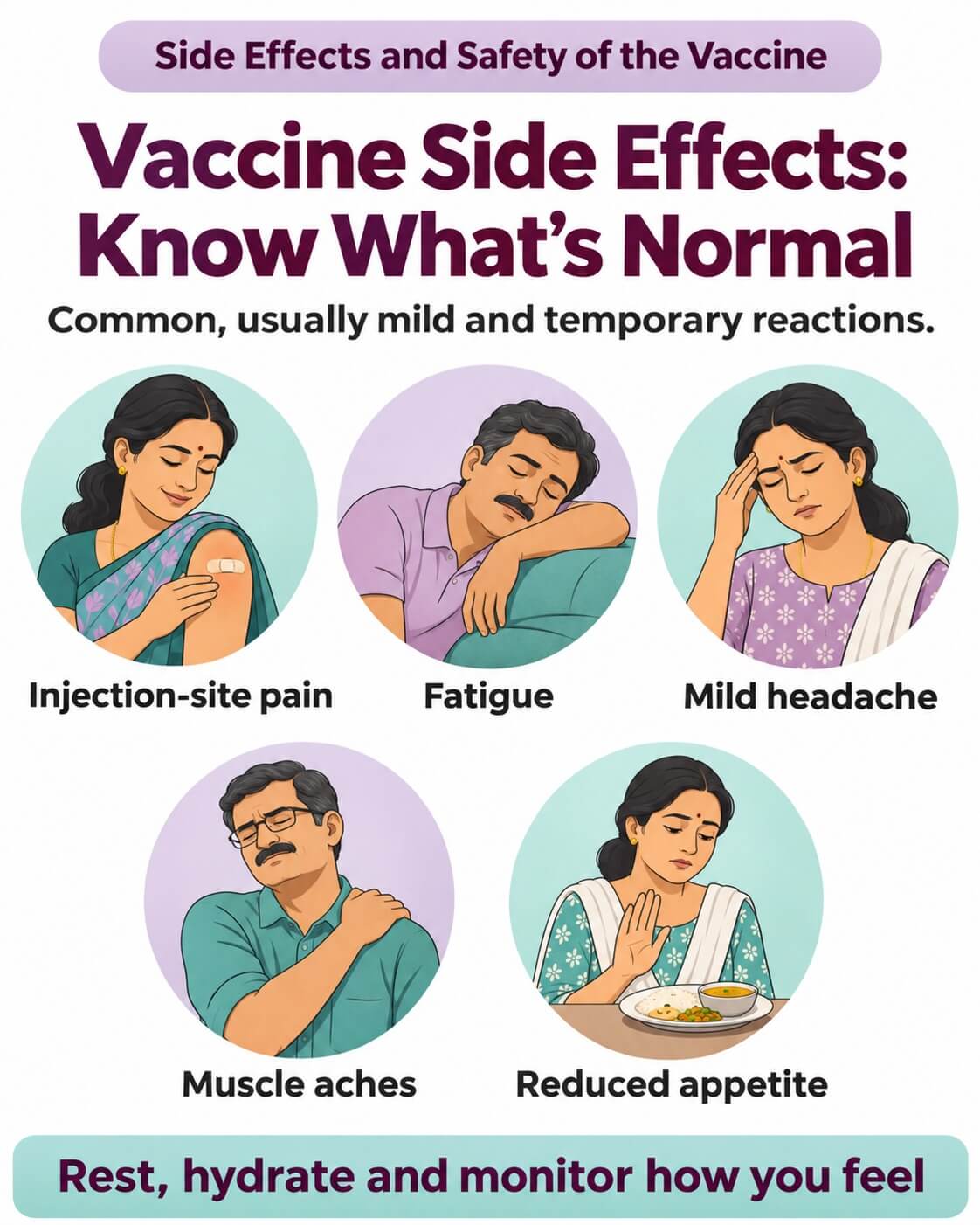
Pneumococcal vaccines have been used for many years and are generally well tolerated. The vaccines do not contain live bacteria, so they cannot cause pneumonia. Common effects are mild and usually settle within a day or two:
- Pain, redness or swelling where the injection was given
- Mild fever or feeling tired
- Muscle aches or a mild headache
- Reduced appetite for a short while
Serious allergic reactions are rare. Difficulty in breathing, swelling of the face or throat, or widespread hives soon after vaccination need immediate medical attention. Do not take the vaccine if you are unwell with a fever, and let your doctor know about any earlier reaction to a vaccine.
Pneumonia Vaccine Cost in India
The pneumonia vaccine cost in India varies from one vaccine, clinic and dosing plan to another, so there is no single price. Confirm the fee after your consultation, and ask what the quoted amount includes. Factors that affect the cost:
Type of vaccine: One dose of PCV20 and a two-vaccine course of PCV13 and PPSV23 are priced differently.
- Number of doses: A longer plan means more visits and more doses.
- Manufacturer and supply: Different products are priced differently.
- Clinic or hospital: Location, facilities and the setting where the vaccine is given.
- Inclusions: Consultation, vaccine, administration and a vaccination record card.
Insurance is worth checking too. Many health policies do not cover adult vaccination, so read your policy’s exclusions and ask your insurer before you begin.
Other Ways to Prevent Pneumonia in Older Adults
A vaccine is one layer of protection. These everyday habits add to it:
- Get the annual flu vaccine: Influenza can lead to pneumonia, and the flu vaccine protects against a different germ from the pneumococcal vaccine.
- Stay up to date with other vaccines: Ask your doctor about COVID-19 and other adult vaccines.
- Do not smoke: Smoking damages the lungs’ natural defences. Support to quit is available.
- Wash hands often: Especially before meals and after coming home from crowded places.
- Look after your mouth: Brush twice a day and keep up dental check-ups, as germs from the mouth can reach the lungs.
- Manage chronic conditions: Keep blood sugar, blood pressure and breathing conditions under control.
- Eat well and keep moving: A balanced diet and gentle regular activity support immunity and lung strength.
- Seek care early: Do not wait out a cough or fever that lingers in an older person.
Myths vs Facts (Supporting Infographics)
|
Myth |
Fact |
|
Pneumonia only affects people who are already very ill. |
Anyone can get pneumonia. The risk rises with age and with long-term conditions. |
|
The vaccine can give you pneumonia. |
The vaccines do not contain live bacteria. Mild soreness or tiredness is the body’s normal response. |
|
The flu shot also protects against pneumonia. |
The flu vaccine protects against influenza. The pneumococcal vaccine protects against a different germ. Both have a role. |
|
Having had pneumonia once means I am immune. |
Pneumonia can come back, and one infection does not protect against every type. |
|
A vaccinated person cannot get pneumonia. |
Vaccination lowers the risk of pneumococcal disease. It does not prevent every kind of pneumonia. |
|
The vaccine is only for the very old. |
Adults with certain conditions may be advised to take it earlier, as their doctor suggests. |
When to Talk to a Doctor About Vaccination
A conversation is worth having if:
- You are 60 or above, or younger with a long-term health condition, and have never had a pneumococcal vaccine
- You are unsure which pneumococcal vaccines you have had before
- You have had a reaction to a vaccine, or have allergies
- You live with diabetes, COPD, heart, kidney or liver disease
- A parent or relative is in a care home or has recently left hospital
Vaccination prevents illness and does not treat it. If an older person develops fever, cough, fast breathing, chest pain, new confusion or unusual drowsiness, seek medical care promptly.
FAQs on Pneumonia Vaccination for Adults
Is pneumonia vaccination necessary after 60?
PCV13 vs PPSV23: which is better?
How many doses do I need?
It depends on your age, risk category and earlier vaccines. Eligible adults who have not been vaccinated before can receive one dose of PCV20. If PCV20 is not used, PCV13 followed by PPSV23 is an alternative; the interval depends on the person’s risk category.
How long does protection last?
Can I take it with the flu vaccine?
Is the vaccine safe for people with diabetes, COPD or heart disease?
I have already had pneumonia. Do I still need the vaccine?
Possibly. Pneumonia can return and can be caused by different types of the bacterium, so it is worth discussing with your doctor.
Is the pneumonia vaccine covered by insurance?
Can I take the vaccine if I have a cold or fever?
Conclusion
Protection against pneumonia does not have to wait for an emergency. A well-timed pneumococcal vaccine, together with the annual flu vaccine, good habits and care for any long-term condition, offers sensible layers of protection as the years pass. If you are wondering which vaccine suits you or a parent, a consultation with a qualified doctor can help you find out. You are welcome to book a consultation at RxDx Clinics whenever you feel ready.
