

Introduction
When most of us think about body fat, we picture what we can pinch, which is the soft layer just beneath the skin. But there’s another type of fat that’s far less visible. Meet Visceral Fat: the deep, internal fat that wraps around your vital organs and can silently undermine your health.
Understanding what visceral fat is, where it comes from, and how to manage it is one of the most important things you can do for your long-term wellbeing.
So, What Exactly Is Visceral Fat?
Visceral fat is fat that resides inside your chest and abdomen, wrapping around several internal organs including your heart, kidneys, and liver. Unlike the fat you can feel on the surface of your skin, visceral fat is tucked deep beneath your abdominal muscles and completely out of reach.
The word “visceral” comes from “viscera,” the medical term for internal organs and tissues. It is healthy and completely normal to have some visceral fat, as it serves as a protective cushioning function for your organs. The concern arises when you have too much of it.
Visceral Fat vs. Subcutaneous Fat: What’s the Difference?
These two types of fat are quite different in nature and health impact:
- Subcutaneous fat sits just under the skin. It’s the fat you can pinch around your hips, belly, thighs, and buttocks and it makes up roughly 90% of total body fat for most people.
- Visceral fat, on the other hand, lies deep in the abdominal cavity, surrounding your internal organs. It accounts for about 10% of body fat in most people.
Why Does Visceral Fat Matter?
Here’s where things get serious. Visceral fat isn’t just an inactive storage depot, it is metabolically active, meaning it behaves almost like a living organ itself.
This “active fat” continuously releases inflammatory chemicals and hormones into your bloodstream, disrupting normal bodily functions. This can lead to insulin resistance, systemic inflammation, and metabolic disturbances, all of which are risk factors for serious chronic disease.
In short, having excess visceral fat does not just affect the scales. It affects your body’s entire internal chemistry.
Where Is Visceral Fat Found and What Is It Made Of?
Organs It Surrounds
Visceral fat cushions and surrounds several critical internal organs, including:
- Heart
- Intestines
- Kidneys
- Liver and gallbladder
- Mesentery
- Pancreas
- Stomach
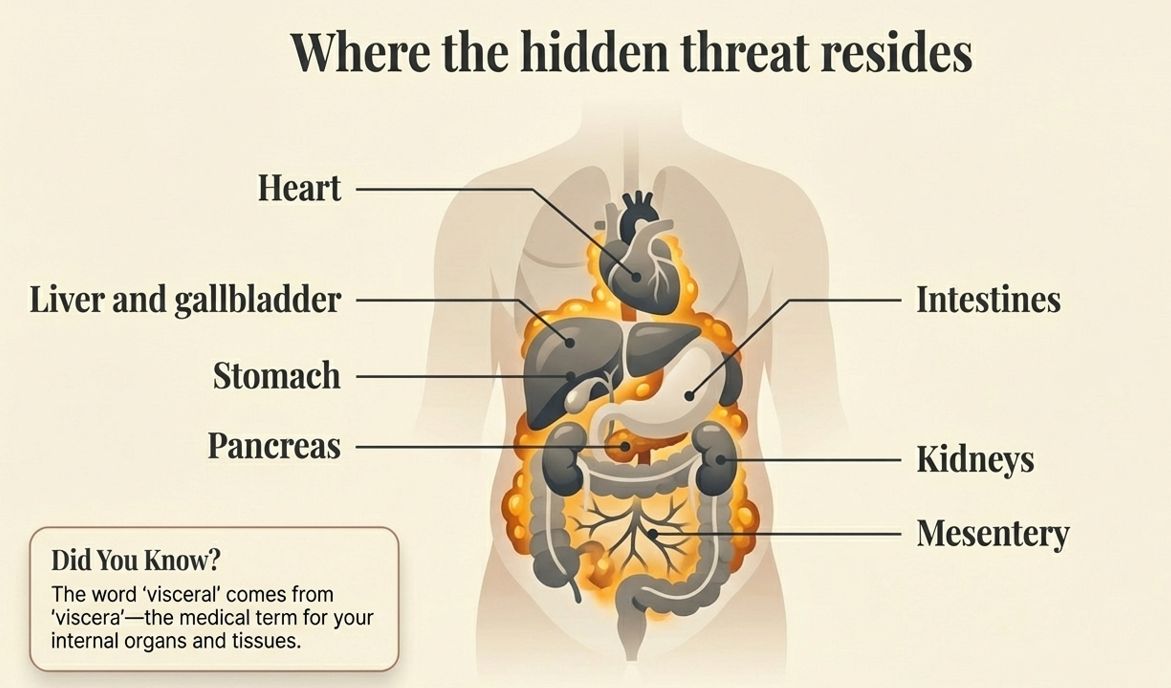
It is worth mentioning that belly fat, what many people casually refer to as a “beer belly” or “spare tyre”, includes both visceral and subcutaneous fat.
What Is Visceral Fat Made Of?
Visceral fat is made up of adipocytes (fat cells). The adipocytes in visceral fat are particularly sensitive to hormones, the chemical messenger molecules your body relies on to regulate various processes. This hormonal sensitivity directly influences how your body metabolises and stores fat, making visceral fat especially responsive (for better or worse) to lifestyle and hormonal changes.
What Causes Excess Visceral Fat?
Everyone has some visceral fat, and genetics play a significant role in how much you have and where it accumulates. which is part of what determines your overall body shape.
However, environmental factors and personal choices are equally important:
- Diet: Consuming high amounts of fatty foods and refined carbohydrates (sugars) encourages your body to produce more visceral fat.
- Inactivity: A sedentary lifestyle means your body stores more visceral fat than it burns for energy.
- Stress: Chronic stress triggers the release of cortisol, a stress hormone that directly stimulates visceral fat storage. This is an often-overlooked but very real driver of abdominal weight gain.
Health Conditions Linked to Visceral Fat
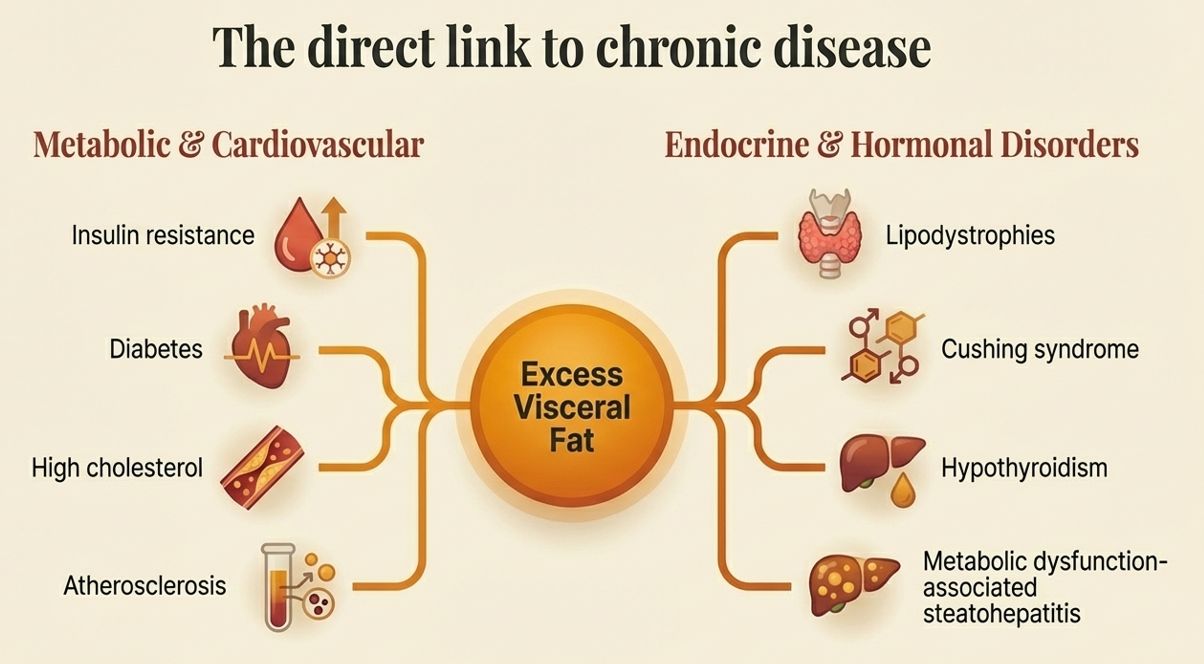
Excess visceral fat is most commonly associated with obesity and a cluster of related conditions:
- Diabetes
- High cholesterol
- Circulatory system diseases, including atherosclerosis (hardening of the arteries)
Certain endocrine (hormonal) disorders can also affect visceral fat levels. Whilst less common, these conditions can be serious. They include:
- Lipodystrophies (Certain types of fat tissue disorders)
- Cushing syndrome
- Hypothyroidism
- Metabolic dysfunction-associated steatohepatitis
How to Work Out How Much Visceral Fat You Have
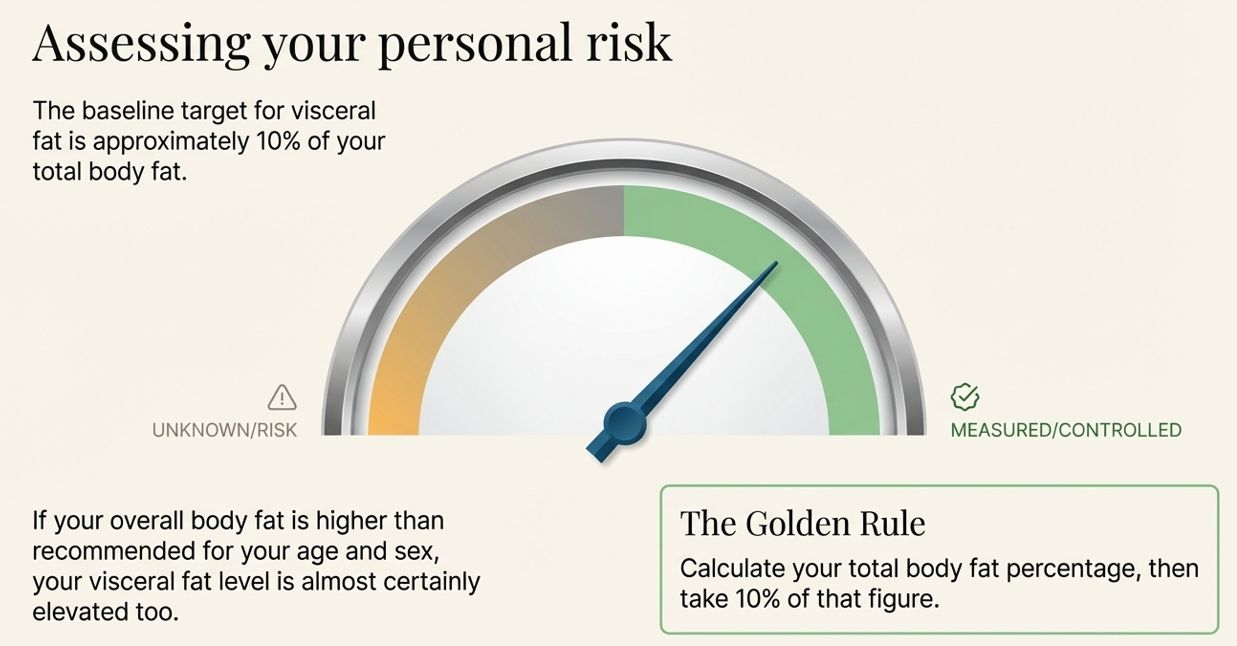
The normal visceral fat range is approximately 10% of your total body fat. To estimate your visceral fat level, calculate your total body fat percentage and then take 10% of that figure. If your overall body fat is higher than recommended for your age and sex, your visceral fat level is likely elevated too.
Body Fat Distribution Methods
There are several accessible ways to assess your body fat distribution:
- Waist measurement: Wrap a tape measure around your waist just above the hip bones. For females, a measurement of 35 inches or more indicates increased risk from visceral fat. For males, the threshold is 40 inches or more.
- Waist-to-hip ratio: Measure both your waist and your hips (at the widest point), then divide your waist size by your hip size. A ratio above 0.85 in females and 0.90 in males suggests abdominal obesity.
- Body composition analysis: Measuring visceral fat traditionally required expensive imaging techniques such as MRI or CT scans. However, modern body composition machines and body fat scales now offer a far more accessible alternative. These devices use bioelectrical impedance analysis (BIA) technology, which sends a safe electrical current through the body to estimate fat distribution.
How to Reduce Visceral Fat
The good news? Visceral fat responds well to lifestyle changes. Maintaining a healthy lifestyle is the most effective way to reduce visceral fat levels and the methods overlap closely with those used for general weight loss:
- Stay active: Aim for at least 30 minutes of exercise, five days a week. Both cardiovascular exercise and strength training are effective. High-intensity interval training (HIIT) has also shown strong results.
- Manage your diet: Eating balanced meals rich in complex carbohydrates, healthy fats, and lean proteins can help you reach your goals. Consulting a registered dietitian or nutritionist is a great step for personalised guidance.
- Consider intermittent fasting: This eating approach focuses on the timing of meals to encourage your body to burn stored fat for fuel.
- Prioritise quality sleep: Poor sleep puts physical stress on your body and can both accelerate visceral fat development and make it harder to lose.
- Reduce stress: Chronic stress elevates cortisol levels, which drives fat storage and can contribute to overall weight gain.
- Limit alcohol consumption: Alcoholic beverages carry significant “empty” calories. Excess alcohol also puts strain on the liver, the organ responsible for processing fat so your body can use it.
Final Thoughts
Visceral fat is one of those health factors that operates largely out of sight, but its effects on the body are anything but invisible. The encouraging part is that it is manageable. With consistent lifestyle habits, most people can meaningfully reduce their visceral fat and lower their risk of the serious health conditions linked to it.
If you’re concerned about your visceral fat levels or unsure where to start, speaking with a healthcare professional is always the best first step.